If you only have time for one historical site in Cappadocia, make it the Göreme Open Air Museum. Just a short walk from Göreme town centre, this UNESCO World Heritage Site is a complete Byzantine monastic settlement carved into the soft volcanic rock — a cluster of churches, chapels, dining halls and living quarters decorated with frescoes that have survived for almost a thousand years.
In this guide, our local team covers everything you need to plan your visit: what you will actually see inside, whether the Dark Church is worth the extra ticket, opening hours, how to get there, and the small details that make the difference between a rushed stop and a memorable one.
What Is the Göreme Open Air Museum?
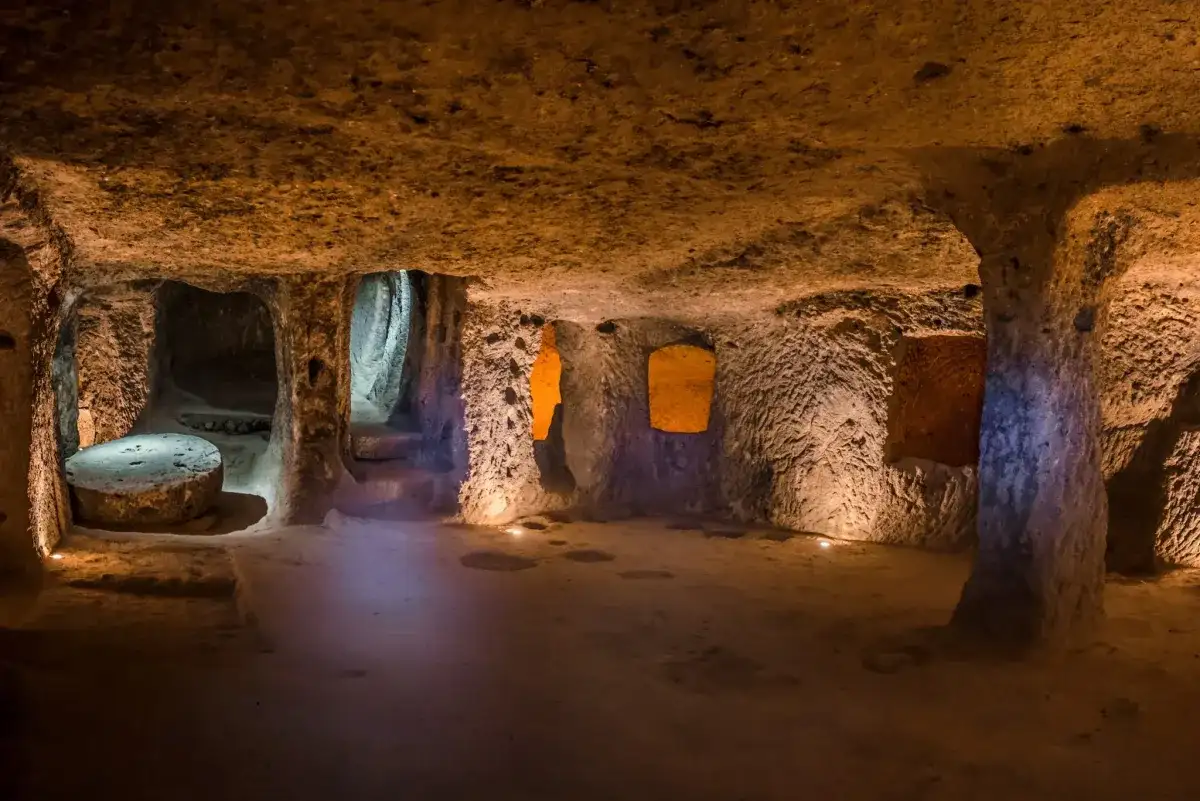
The Göreme Open Air Museum is a rock-cut monastery complex that flourished between the 10th and 12th centuries, when Cappadocia was one of the most important centres of Byzantine monastic life. Monks and nuns carved their entire world into the fairy chimneys and cliff faces: churches with vaulted ceilings, communal kitchens, wine cellars and long stone dining tables that still stand today.
The site was among the first places in Turkey to be inscribed on the UNESCO World Heritage List, back in 1985, together with the surrounding Göreme National Park. What makes it exceptional is not just the architecture but the frescoes — vivid scenes from the life of Christ painted directly onto the rock, many of them remarkably well preserved.
A Short History: Monks in the Fairy Chimneys
Cappadocia's connection to early Christianity runs deep. In the 4th century, St. Basil of Caesarea — one of the most influential figures in early Christian monasticism — encouraged small monastic communities to settle in this region. The soft volcanic tuff was easy to carve, the valleys offered seclusion, and the landscape itself seemed made for contemplation.
Over the centuries, the Göreme valley became a dense monastic settlement. The churches you see today were carved and painted mostly between the 10th and 12th centuries. Some chapels, decorated during the Iconoclastic period (when religious images were forbidden), display only simple red ochre patterns — crosses and geometric motifs — while later churches are covered in rich figurative frescoes. Walking from one to the next, you are effectively walking through the history of Byzantine art.
What You'll See Inside
The museum is a compact loop that most visitors complete in 1.5 to 2 hours. These are the highlights to look out for.
Dark Church (Karanlık Kilise) — the jewel of the museum. Because very little natural light enters the church, its frescoes kept their original deep blues and reds better than anywhere else in Cappadocia. Scenes of the Nativity, the Last Supper and the Crucifixion look almost freshly painted. Entry requires a separate ticket on top of the museum ticket — more on whether it is worth it below.
Apple Church (Elmalı Kilise) — a small, cross-domed church with nine domes and beautifully layered decoration: simple red ochre patterns from the Iconoclastic era peek out from beneath the later frescoes. The “apple” is thought to refer either to a globe held by the Archangel Michael or to an apple tree that once grew by the entrance.
Snake Church (Yılanlı Kilise) — named after the fresco of St. George and St. Theodore slaying a serpent-like dragon. Look for the unusual image of St. Onuphrius, a hermit saint depicted with a long beard and palm leaf.
St. Barbara Chapel (Azize Barbara Şapeli) — a fascinating example of Iconoclastic-period decoration: instead of figures, the walls carry abstract red ochre symbols, geometric shapes and mysterious motifs painted directly onto the rock.
Sandal Church (Çarıklı Kilise) — named after the footprint-like indentations below the Ascension fresco. Its depictions of the Crucifixion and the Betrayal of Judas are among the finest in the valley.
The Nunnery, Refectory and Kitchens — between the churches you will pass a multi-storey nunnery carved into a large fairy chimney, and communal dining halls with rock-cut tables where dozens of monks once ate together. These everyday spaces make the site feel alive in a way that few museums manage.
Buckle Church (Tokalı Kilise) — Don't Miss It
Here is the tip most visitors miss: the Buckle Church, the largest and one of the most impressive churches in the area, is not inside the main gate. It sits about 50 metres down the road toward Göreme, and your museum ticket includes it. Its deep-blue frescoes telling the life of Christ in comic-strip-like bands are worth the two-minute walk on their own.
Is the Dark Church Worth the Extra Ticket?
In our opinion — yes, if you care even a little about art or history. The Dark Church is the best-preserved painted church in Cappadocia, and the difference in colour intensity compared to the other churches is striking. Visits are limited to small groups for conservation reasons, which also means it is the calmest spot in the museum. If you are on a tight budget and plan to see many other churches in the region, you can skip it without ruining your visit, but most of our guests say it was the highlight.
Tickets, Opening Hours and Practical Information
- Opening hours: the museum typically opens at 8:00 every day, closing around 17:00 in winter and 19:00 in the summer season. Last entry is usually one hour before closing.
- Tickets: entry fees for foreign visitors have changed frequently in recent years, so check current prices before you go — as a rough guide, expect somewhere in the range of €20–25 for the main ticket, with a separate fee for the Dark Church. The Museum Pass Cappadocia can pay off if you also plan to visit underground cities and other state-run sites.
- Audio guides are available at the entrance and are a good option if you visit independently.
- Photography is allowed on the grounds, but flash photography is forbidden inside the churches, and some interiors restrict photography entirely to protect the frescoes.
How to Get There
The museum is about 1.5 km from Göreme town centre — a 15–20 minute walk gently uphill along the Müze Caddesi. In summer, start early to avoid walking in the midday heat. Taxis from Göreme take a few minutes, and any hotel can arrange one. For all your options, see our Cappadocia transportation guide.
If you prefer not to organise anything yourself, the museum is a core stop on the classic Cappadocia Red Tour, which combines it with Uçhisar Castle, the Paşabağ fairy chimneys, Devrent Valley and Avanos in one day, with hotel pickup included.
Best Time to Visit
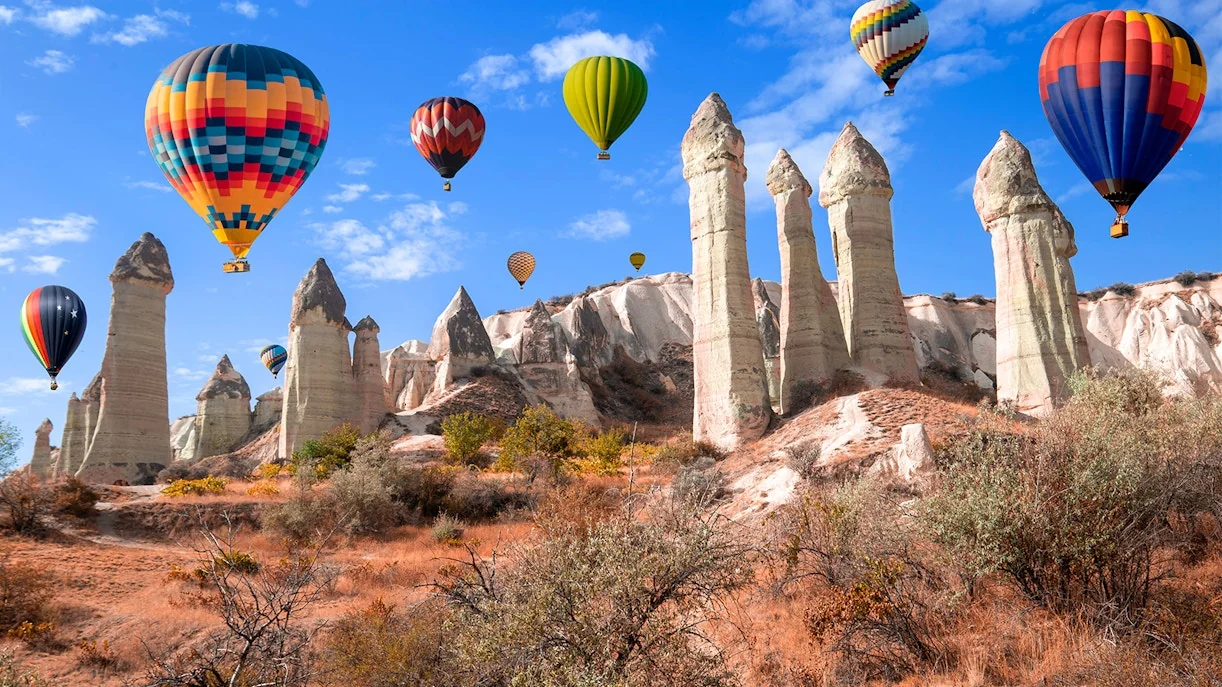
The museum is the most popular sight in Cappadocia, and tour groups arrive in waves from mid-morning. For the quietest experience, be at the gate at opening time — it pairs perfectly with the early finish of a hot air balloon ride — or come after 15:00 when the day-trip crowds thin out.
Season-wise, April–June and September–October offer the most comfortable walking weather. For a month-by-month breakdown, see our guide on the best time to visit Cappadocia.
Tips from Our Guides
- Allow 1.5–2 hours for a relaxed visit, including the Buckle Church.
- Wear comfortable shoes — the paths are uneven and some churches are reached by steps carved into the rock.
- Bring water and sun protection; shade is limited between the churches.
- Interiors are dim — give your eyes a few seconds to adjust and the frescoes will reveal far more detail.
- Combine your visit with nearby Göreme viewpoints for sunset after the museum closes.
Visiting with a guide transforms the experience: the frescoes follow iconographic programs that are hard to decode on your own. If you want the stories behind the images, join our Red Tour. Not sure which option fits you? Read our comparison of the Red Tour with or without museum tickets.
Frequently Asked Questions
How long does a visit to the Göreme Open Air Museum take?
Most visitors spend 1.5 to 2 hours at the site. Add another 15–20 minutes for the Buckle Church across the road, which is included in your ticket.
Is the Göreme Open Air Museum included in the Red Tour?
Yes — it is the centrepiece of the classic Red Tour route. Our Red Tour includes hotel pickup, a professional guide and the museum visit; a ticket-free version is available for Museum Pass holders.
Can I walk to the museum from Göreme?
Yes. It is roughly 1.5 km from the town centre, about a 15–20 minute uphill walk. Taxis are easy to find if you prefer.
Is the Dark Church worth the extra fee?
For most visitors, yes. It contains the best-preserved Byzantine frescoes in Cappadocia, and group sizes inside are limited, making it the most atmospheric church in the museum.
Is the museum suitable for children and older visitors?
Generally yes. The main loop is short, but paths are uneven and some churches involve steps, so sturdy footwear helps. Strollers are difficult inside the church areas.
Planning the rest of your days in the region? Our 3-day Cappadocia itinerary shows how the museum fits into a perfect first morning.