Cappadocia Wine Tasting: Vineyards & Local Wines
Volcanic soil, indigenous grapes, and centuries of winemaking tradition in the heart of Turkey
Most visitors come to Cappadocia for hot air balloons and fairy chimneys, but beneath those iconic landscapes lies another treasure: one of Turkey's oldest and most distinctive wine regions. The same volcanic eruptions that created Cappadocia's surreal rock formations also deposited mineral-rich soils ideal for viticulture. Winemaking here dates back over 4,000 years to the Hittite civilization, and today a new generation of winemakers is reviving indigenous grape varieties that exist nowhere else on Earth.
Whether you're a seasoned wine enthusiast or simply curious, a wine tasting experience is one of the most rewarding — and often overlooked — things to do in Cappadocia. Combine it with the regional cuisine on a Custom Tour for the perfect gourmet day.
Why Cappadocia Wine Is Special
Volcanic Terroir
Cappadocia's vineyards sit at 1,000-1,200 meters altitude on soil composed of volcanic tuff, pumice, and ash deposited by ancient eruptions of Mount Erciyes and Mount Hasan. This unique terroir gives Cappadocian wines their distinctive mineral character — a flinty, almost smoky quality that's impossible to replicate elsewhere. The porous volcanic soil drains well, forcing vine roots deep to find water and concentrating flavors in the grapes.
The continental climate with hot days and cool nights during the growing season creates excellent acidity-sugar balance. Low rainfall means grapes develop intense flavors without excessive dilution. And the altitude provides UV exposure that thickens grape skins, boosting color and tannin in red wines.
Indigenous Grape Varieties
What truly sets Cappadocian wine apart are the indigenous Anatolian grape varieties that have been cultivated here for millennia:
- Emir (White) — The signature grape of Cappadocia, grown almost exclusively in the region. Produces crisp, mineral-driven whites with green apple and citrus notes. Best enjoyed young and chilled.
- Kalecik Karasi (Red) — Often called Turkey's answer to Pinot Noir. Light to medium-bodied with cherry, raspberry, and subtle spice. Elegant and food-friendly.
- Okuzgozu (Red) — "Bull's Eye" grape from eastern Anatolia, increasingly used in Cappadocian blends. Deep color, dark fruit, soft tannins. Think Merlot-like richness.
- Bogazkere (Red) — "Throat Scratcher" — bold, tannic, and full-bodied. Often blended with Okuzgozu to soften it. Cappadocia's answer to Cabernet Sauvignon.
- Narince (White) — Aromatic and floral, with peach and honeysuckle notes. Makes excellent single-varietal wines and traditional blends.
Best Wineries in Cappadocia
| Winery | Location | Tasting Price | Speciality Wines | Cave Cellar |
|---|---|---|---|---|
| Turasan | Urgup | Free - €5 | Emir Reserve, Kalecik Karasi, Turasan Prestige | Yes — historic underground cellar |
| Kocabag | Uchisar | Free - €5 | Emir, Okuzgozu-Bogazkere blend, Rose | Yes — carved into fairy chimney |
| Argos | Uchisar | €10-20 | Premium Kalecik Karasi, Emir barrel-aged, Syrah blend | Yes — luxury hotel cellar |
| Mahalli | Urgup | €5-10 | Natural wines, Narince, Orange wine, Amphora-aged | No — modern boutique winery |
| Toik Wines | Goreme | €5-10 | Small-batch Emir, Kalecik Karasi, Pet-Nat | No — artisan tasting room |
Turasan Winery
Founded in 1943, Turasan is the oldest and largest winery in Cappadocia. Located in Urgup, their underground cave cellar carved into volcanic rock maintains a natural temperature of 14-16°C year-round — perfect for aging. The free self-guided tour takes you through production areas and barrel rooms before a tasting of 4-5 wines. Their Emir Reserve is considered the benchmark for this grape variety. The on-site shop offers excellent prices.
Kocabag Winery
Situated between Uchisar and Goreme, Kocabag is famous for its cave cellar carved directly into a fairy chimney — possibly the most photogenic wine cellar in the world. Their production focuses on indigenous varieties, and the Okuzgozu-Bogazkere blend is their standout red. Tastings are informal and friendly, often conducted by family members. It's included on many Red Tour itineraries as a stop.
Argos in Cappadocia
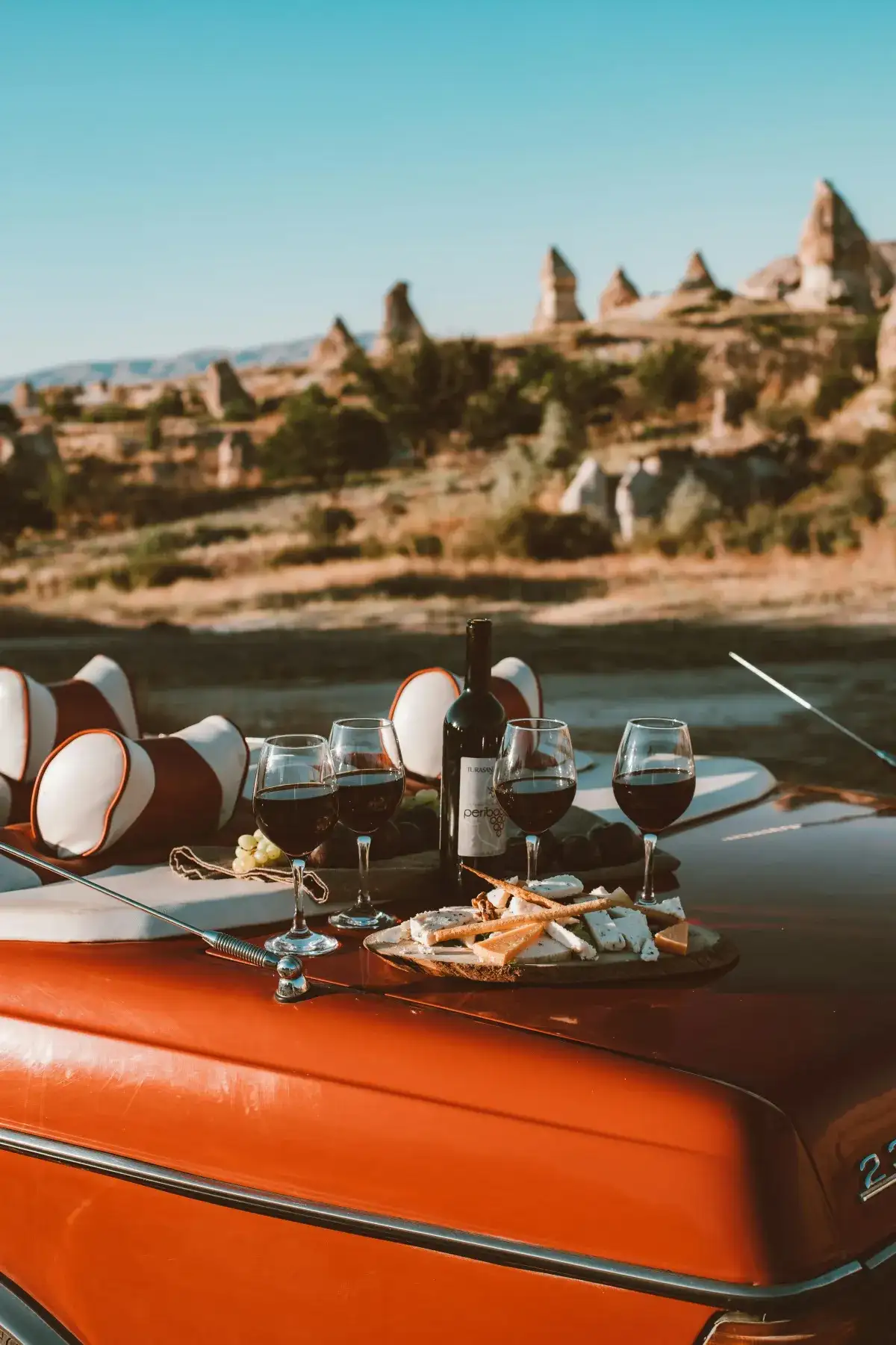
Part of the luxury Argos hotel in Uchisar, this is Cappadocia's most premium wine experience. Their sommelier-led tastings pair wines with local cheeses and charcuterie in a stunning underground cellar. Wines are made from carefully selected local grapes with modern techniques. The barrel-aged Emir is revelatory — proving this grape can develop complexity beyond its usual fresh-and-simple style. Reservations recommended.
Mahalli Winery
The newcomer making waves. Mahalli focuses on natural and minimal-intervention wines using organic practices. Their orange wine (skin-contact white) and amphora-aged wines push boundaries while respecting tradition. The tasting room in Urgup is modern and informative, with detailed explanations of their approach. Wine geeks will love this place.
Wine & Food Pairing
Cappadocian wines pair beautifully with the region's cuisine. Here are the best combinations:
- Emir + Manti — The crisp acidity of Emir cuts through the richness of yogurt-topped Turkish dumplings
- Kalecik Karasi + Testi Kebab — The light red complements the slow-cooked meat from clay pot kebab without overpowering it
- Okuzgozu + Kuzu Tandır — Full-bodied red matches the intensity of slow-roasted lamb
- Narince + Gozleme — Aromatic white pairs with cheese-filled flatbread perfectly
- Bogazkere + Sucuk — Bold red stands up to spicy Turkish sausage
For the full culinary experience, explore our guide to Cappadocia's traditional cuisine.
Cave Wine Cellars: A Unique Experience
What makes Cappadocian wine culture truly unique is the tradition of cave wine cellars. For centuries, locals have used naturally cool underground chambers carved into soft volcanic rock to store and age wine. These caves maintain a constant 14-16°C temperature and 70-80% humidity year-round — ideal conditions that modern wine fridges try to replicate.
Several hotels and restaurants still use cave cellars, and some wineries offer cellar tours that take you deep underground. The atmosphere is unforgettable: dim lighting, ancient stone walls, rows of oak barrels, and the musty-sweet smell of aging wine.
Practical Tips for Wine Tasting
- Best season — September-October for harvest season (baglama), when wineries are buzzing with activity
- Designated driver — Book a Custom Tour with a driver so everyone can taste freely
- Buy at the source — Wines are 30-50% cheaper at wineries than in restaurants or airports
- Shipping — Most wineries can arrange shipping within Turkey. International shipping is difficult due to customs
- Combine with food — Some wineries offer cheese and charcuterie boards; others are near excellent restaurants
- Budget — You can visit 2-3 wineries in a half day, spending €10-30 total on tastings
Discover more about the local culture and traditions in our Local Culture guide.
Frequently Asked Questions
Explore Cappadocia Tours
Book directly with us — no middleman, no commission. Professional guides, transparent pricing.
Isabel — Local Tour Guide & Travel Expert
Isabel lives in Cappadocia and has been a professional tour guide in the region for over 25 years. As the founder of FELIZ TURISMO, she is known for her infectious energy and fun personality that turn every tour into an unforgettable experience. She has helped over 10,000 travelers discover the magic of Cappadocia with deep knowledge of the region's history, culture, and hidden gems. Isabel is also a devoted friend to the stray animals of Cappadocia — FELIZ TURISMO dedicates a portion of its revenue to feeding and providing healthcare for street animals in the region.
Published: March 8, 2026