Uchisar Castle: Panoramic Views & Visitor Guide
Climb to the highest point in Cappadocia for unforgettable 360-degree views
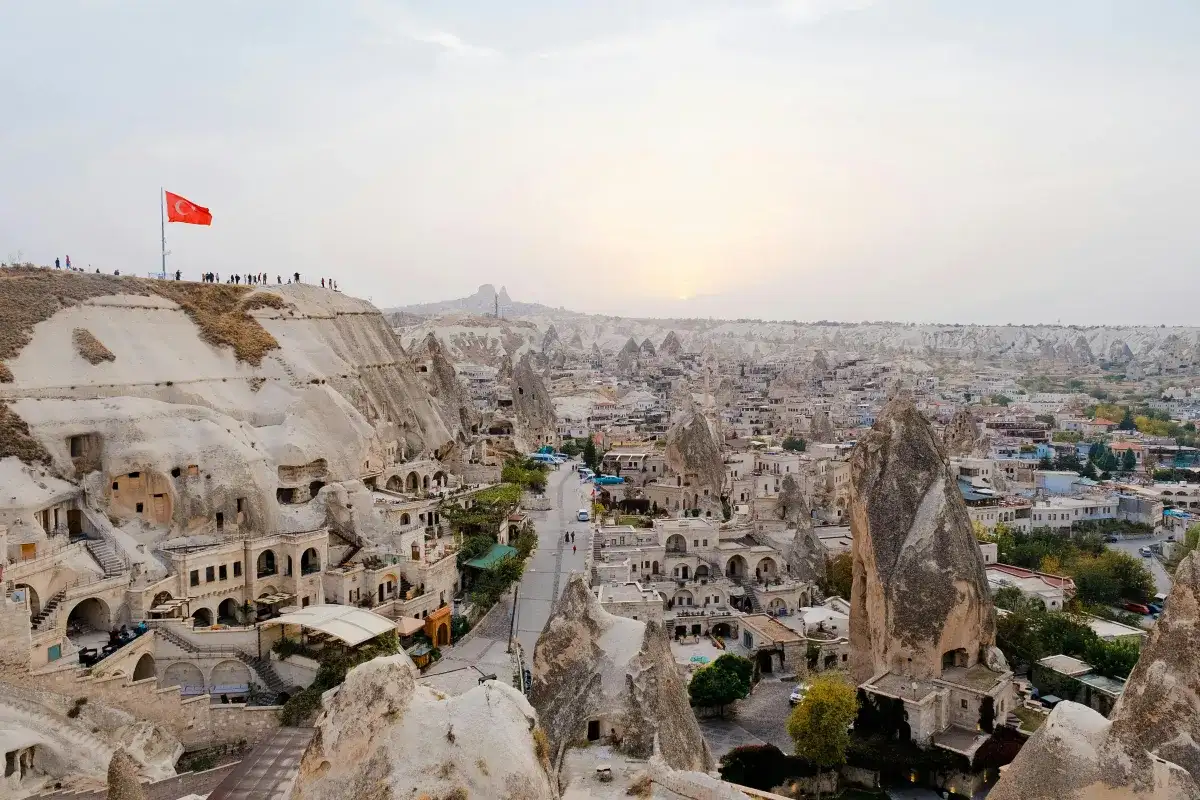
Uchisar Castle is a towering natural rock fortress that serves as the highest point in Cappadocia. Rising dramatically from the center of the small town of Uchisar, this massive volcanic rock formation is riddled with tunnels, rooms, and passages carved by humans over thousands of years. From its summit, you get the most spectacular 360-degree panoramic views in all of Cappadocia — from the fairy chimneys of Goreme to the snow-capped peaks of Mount Erciyes in the distance.
History of Uchisar Castle
The name "Uchisar" comes from the Turkish words "uc" (three) and "hisar" (fortress), referring to the three main rock formations that once formed a defensive line. The castle has been used as a natural fortress since at least the Hittite period (around 1500 BC) and was continuously inhabited through the Roman, Byzantine, Seljuk, and Ottoman periods.
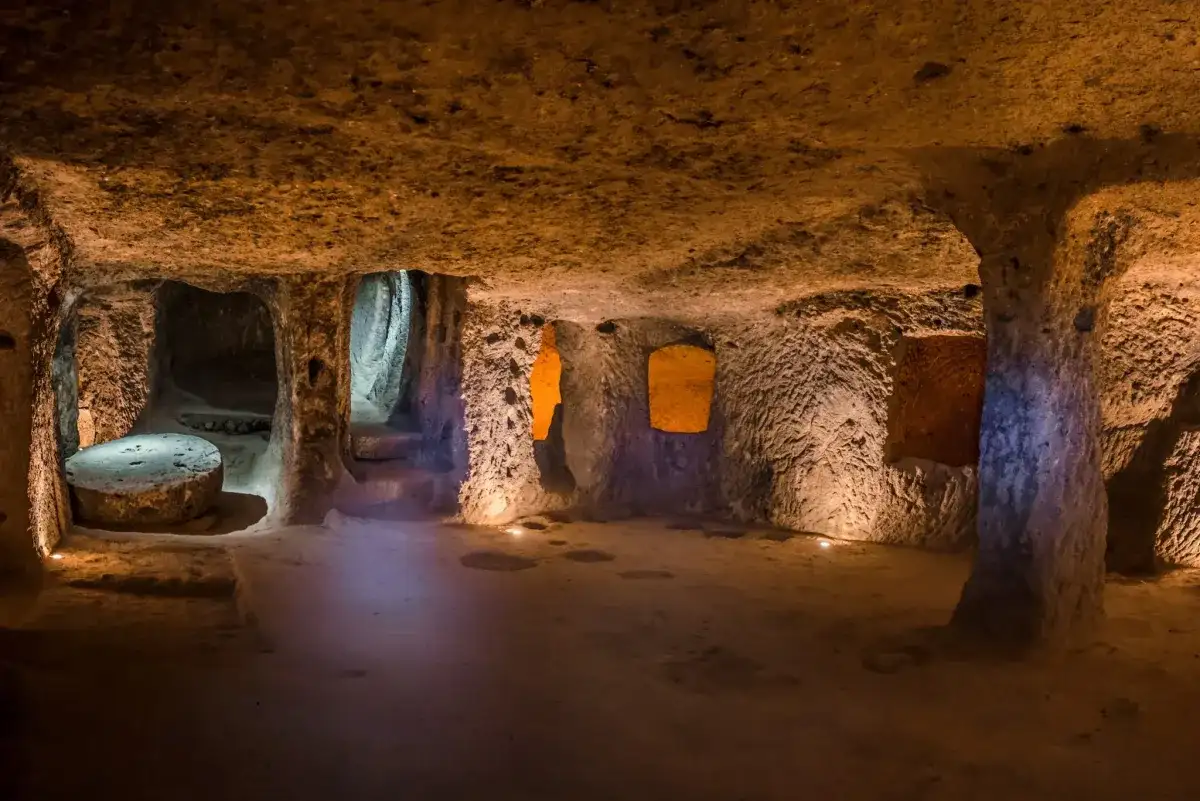
Like the underground cities of Cappadocia, the castle was carved into the soft volcanic tuff rock. At its peak, it contained hundreds of interconnected rooms — living quarters, storage rooms, churches, and defensive positions spread across multiple levels. Over the centuries, erosion has caused many outer rooms to collapse, giving the rock its distinctive honeycomb appearance.
The castle was last used as a residential area until the 1960s, when the Turkish government relocated the remaining inhabitants due to safety concerns about rock collapses. Today, it's one of Cappadocia's most popular tourist attractions.
What to See at Uchisar Castle
- The Summit: The main attraction is climbing to the top for 360-degree views. The path winds through carved tunnels and narrow passages, emerging at the peak with views in every direction.
- Pigeon Houses (Guvercin Evleri): The cliff faces around the castle are dotted with carved niches for pigeons. Historically, pigeon droppings were collected as fertilizer for the region's vineyards. The niches are often decorated with colorful painted facades.
- Rock-cut Rooms: As you climb, you'll pass through rooms and corridors carved directly into the rock. Imagine entire families living in these stone chambers for centuries.
- The Village: The charming town of Uchisar at the base of the castle has stone houses, boutique hotels, and cafes with terrace views of the valley.
The Views: What You'll See from the Top
The summit of Uchisar Castle offers the most comprehensive panoramic view in Cappadocia. On a clear day, you can see:
- North: Goreme and its fairy chimneys, the Open-Air Museum area
- East: Mount Erciyes (3,917 m), the snow-capped volcano visible in the distance
- South: Pigeon Valley stretching toward Goreme, Ortahisar rock castle
- West: Red and Rose Valleys, the town of Cavusin
Viewpoint Comparison
Cappadocia has several famous viewpoints. Here's how Uchisar Castle compares:
| Viewpoint | Location | Height | Best For | Entrance Fee |
|---|---|---|---|---|
| Uchisar Castle | Uchisar town | ~1,350 m (highest point) | 360° panorama, sunset, photography | ~€5-7 |
| Lover's Hill (Asiklar Tepesi) | Between Goreme and Uchisar | ~1,200 m | Balloon photos at sunrise, valleys | Free |
| Ortahisar Castle | Ortahisar town | ~1,200 m | Similar rock castle, less crowded | ~€3-5 |
| Sunset Point (Goreme) | Goreme hillside | ~1,100 m | Sunset over fairy chimneys | Free |
| Red Valley Viewpoint | Red/Rose Valley ridge | ~1,150 m | Valley sunset, hiking views | Free |
Best Time for Photos
Uchisar Castle is photogenic all day, but the absolute best time is sunset. Here's why:
- The golden hour light bathes the castle and surrounding landscape in warm tones
- The valleys below fill with soft shadow, creating dramatic depth
- Mount Erciyes glows pink and orange in the distance
- The castle itself becomes a striking silhouette against the sky
For photographing from the castle summit, both sunrise and sunset work beautifully. Sunrise is less crowded and offers softer light, while sunset delivers more dramatic colors.
Nearby Attractions
Uchisar Castle pairs perfectly with these nearby attractions:
- Pigeon Valley (Guvercin Vadisi): A scenic hiking trail from Uchisar to Goreme (about 4 km), named for the pigeon houses carved into the cliffs.
- White Valley (Baglidere): A stunning hiking trail with white rock formations, accessible from Uchisar.
- Love Valley: A short drive away, famous for its phallic fairy chimney formations.
- Goreme Open-Air Museum: Just 4 km from Uchisar, the UNESCO World Heritage site.
All of these are covered on the Red Tour, which includes Uchisar Castle as one of its main stops.
Visiting Tips
- Wear sturdy shoes — The climb involves uneven rock steps and narrow passages.
- Allow 30-45 minutes — The climb up takes about 15-20 minutes, plus time to enjoy the views.
- Bring water — No shade on the ascent, and the summit can be windy.
- Visit at sunset — For the most dramatic photos and views.
- Watch your step — Some passages are narrow with steep drops. Keep children close.
- Combine with Pigeon Valley — Walk the beautiful trail to/from Goreme.
Entrance Fee & Hours (2026)
- Entrance fee: approximately €5-7 (price set in Turkish Lira)
- Hours: Generally 8:00 AM to sunset (hours vary seasonally)
- Museum Pass Turkey: covers entry
- Red Tour: entrance included in tour price (€45)
How to Get There
Uchisar is located 4 km from Goreme and 7 km from Nevsehir.
- Red Tour: The Red Tour includes Uchisar Castle with hotel pickup. The easiest option.
- Dolmus (minibus): Regular service from Goreme (5 minutes, approximately €1)
- Walking: A pleasant 45-minute walk from Goreme, or take the scenic route through Pigeon Valley
- Taxi: About €5-8 from Goreme
For more sunset spots in Cappadocia, check our photography guide. Planning your trip? See our 3-day itinerary.
Frequently Asked Questions
Explore Cappadocia Tours
Book directly with us — no middleman, no commission. Professional guides, transparent pricing.
Isabel — Local Tour Guide & Travel Expert
Isabel lives in Cappadocia and has been a professional tour guide in the region for over 25 years. As the founder of FELIZ TURISMO, she is known for her infectious energy and fun personality that turn every tour into an unforgettable experience. She has helped over 10,000 travelers discover the magic of Cappadocia with deep knowledge of the region's history, culture, and hidden gems. Isabel is also a devoted friend to the stray animals of Cappadocia — FELIZ TURISMO dedicates a portion of its revenue to feeding and providing healthcare for street animals in the region.
Published: March 8, 2026