Stargazing in Cappadocia: Best Spots & Night Photography
Where fairy chimneys meet the Milky Way — Cappadocia's spectacular night sky
Cappadocia is famous for its hot air balloons at sunrise, but the night sky is equally spectacular — and far fewer visitors experience it. Located in central Turkey's high plateau, far from major cities, Cappadocia has remarkably low light pollution that reveals a star-filled sky most urban dwellers have never seen.
On a clear night, you can see the Milky Way arching across the sky above fairy chimneys, creating one of the most surreal and photogenic night landscapes anywhere on Earth. This guide covers the best spots, ideal months, photography tips, and everything you need for an unforgettable stargazing experience.
Why Cappadocia Is Great for Stargazing
- Low light pollution — The nearest major city (Kayseri, population 1.4 million) is 75 km away, and the region's small towns produce minimal light
- High altitude — At roughly 1,000-1,200 meters elevation, you're above much of the atmospheric haze
- Dry climate — Central Anatolia has a semi-arid continental climate with many clear nights, especially in summer and autumn
- Unique foreground — Fairy chimneys, rock formations, and cave dwellings create otherworldly silhouettes against the star field
- Minimal light infrastructure — Valley areas and rural spots have virtually no artificial lighting
Best Stargazing Spots
| Spot | Light Pollution Level | Night Accessibility | Milky Way Visibility | Safety |
|---|---|---|---|---|
| Love Valley Overlook | Very low | Easy (drive-up) | Excellent | Safe (open plateau) |
| Rose Valley Viewpoint | Very low | Moderate (short walk from parking) | Excellent | Use caution on trails at night |
| Uchisar Hilltop | Low-moderate | Easy (road access) | Good (some town light) | Safe |
| Goreme Panoramic Viewpoint | Moderate | Easy (drive-up) | Good | Safe (near road) |
| Devrent Valley | Very low | Easy (flat parking area) | Excellent | Remote — bring a companion |
| Sword Valley (Kiliclar) | Very low | Moderate (trail entrance) | Excellent | Stay near entrance at night |
| Hotel Rooftop Terraces | Moderate | Very easy | Good | Very safe |
Best Spots in Detail
Love Valley Overlook
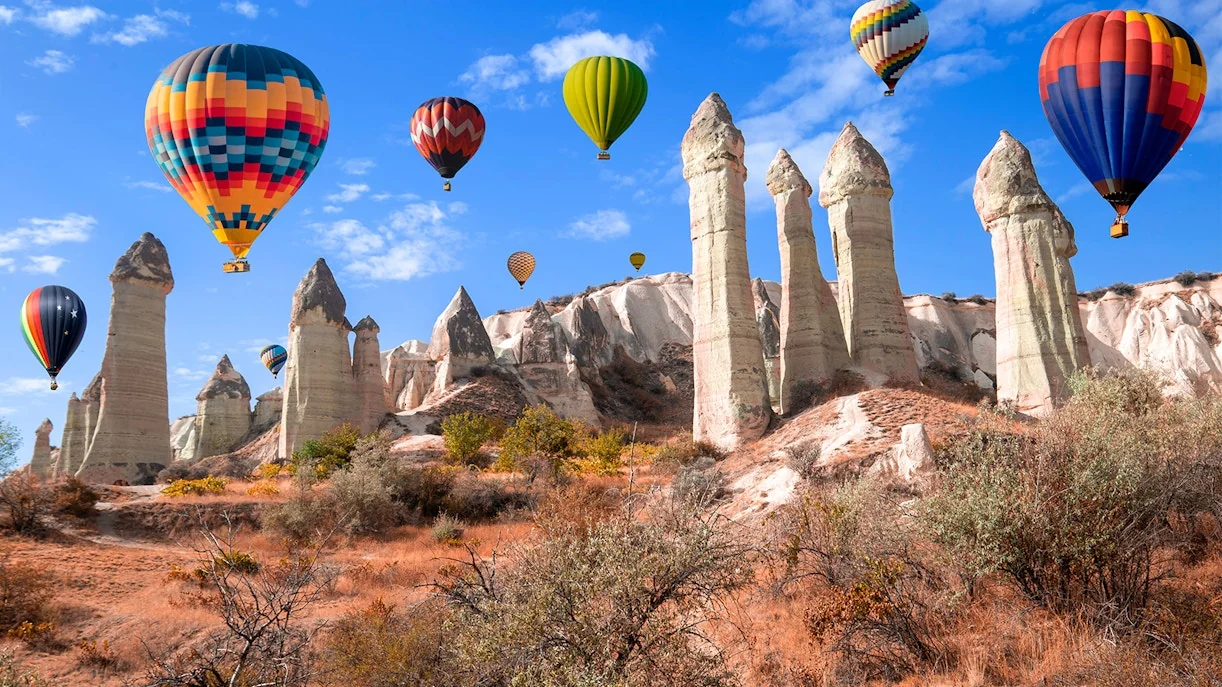
Our top recommendation. The Love Valley overlook sits on a plateau above the valley, accessible by car. At night, the tall phallic fairy chimneys create dramatic silhouettes against the star field. The southern sky is unobstructed, making it ideal for Milky Way photography. Park at the viewpoint and set up on the flat area beside the road.
Best direction to face: South-southeast for the Milky Way core (summer months).
Rose Valley Sunset Viewpoint
The same sunset viewpoint that's popular during the day becomes a superb stargazing spot at night. There's a short walk (5-10 minutes) from the parking area. The valley below you is completely dark, with fairy chimneys creating a jagged horizon line. Bring a headlamp with a red filter to preserve your night vision on the trail.
Uchisar Hilltop
The area around Uchisar Castle offers elevated 360-degree views. While the town itself produces some light, the views to the south and east are dark. The advantage of Uchisar is altitude — you're at one of the highest points in the region, above much of the haze. Several spots along the road above the village offer good access without climbing the castle (which is closed at night).
Devrent Valley
For the darkest skies, Devrent (Imagination Valley) is hard to beat. Located between Goreme and Avanos, away from any town, the parking area is flat and completely dark. The animal-shaped rock formations make interesting foreground subjects for night photography. However, it's remote — visit with a companion and be comfortable navigating in darkness.
Best Months for Stargazing
Cappadocia has good stargazing potential year-round, but conditions vary:
Milky Way Season: May through September
The Milky Way core — the bright, dense center of our galaxy — is visible in Cappadocia's sky from May through September. This is when the most dramatic night sky photos are possible.
- May-June — Milky Way rises in the southeast around midnight. Best for late-night photographers.
- July-August — Peak season. Milky Way is visible from around 10 PM, arching high across the sky by midnight. Warm nights make extended stargazing comfortable.
- September — Milky Way visible in the early evening (8-9 PM), setting by midnight. Excellent because you don't need to stay up late.
Winter Stargazing: November through February
Winter offers the clearest, driest air and the longest nights. While the Milky Way core isn't visible, Orion, Sirius, the Pleiades, and other winter constellations are spectacular. The challenge: temperatures drop to -5 to -15°C. Dress very warmly.
Moon Phase Matters
The moon is your biggest enemy for stargazing. A full moon washes out the Milky Way and most faint stars. Plan your stargazing around the new moon (when the sky is darkest) or at least when the moon has set. Check a moon phase calendar before your trip.
Night Photography Tips
Cappadocia is a dream for astrophotography. The unique fairy chimney foregrounds combined with the Milky Way create images you simply can't get anywhere else.
Camera Settings for Milky Way
- Mode: Manual (M)
- Aperture: f/2.8 or wider (the lower the number, the better)
- ISO: 3200-6400 (start at 3200, increase if needed)
- Shutter speed: 15-25 seconds (use the 500 Rule: 500 ÷ focal length = max seconds before star trailing)
- Focus: Manual focus to infinity — use live view zoomed in on a bright star to nail focus
- White balance: 3800-4200K (or adjust in post)
- Format: RAW (essential for post-processing night images)
Essential Gear
- Sturdy tripod — Non-negotiable for night photography
- Wide-angle lens — 14-24mm range ideal for capturing the Milky Way arc plus foreground
- Fast lens — f/2.8 or faster. f/1.4 is ideal but expensive
- Remote shutter release — Or use your camera's 2-second timer to avoid shake
- Headlamp with red filter — White light ruins night vision for 20+ minutes
- Extra batteries — Cold nights drain batteries fast
- Star map app — Stellarium or Sky Guide help locate the Milky Way
Composition Tips
- Include fairy chimneys — A recognizable foreground makes Cappadocia night photos unique
- Light painting — Use a brief flash of dim light to illuminate a foreground fairy chimney (1-2 seconds during the exposure)
- Panoramas — Stitch multiple frames to capture the full Milky Way arc over a wide landscape
- Portrait orientation — Vertical shots can capture both the Milky Way overhead and fairy chimneys below
For more photography advice, read our Cappadocia Photography Guide.
Stargazing Without a Camera
You don't need photography equipment to enjoy the night sky. Tips for naked-eye stargazing:
- Allow 20 minutes for dark adaptation — Your eyes need time to adjust. Avoid looking at phone screens (use red filter mode if you must).
- Bring a blanket — Lying on your back is the best stargazing position. A thin mat or blanket on the ground works perfectly.
- Use a star map app — Hold your phone up to identify constellations, planets, and the Milky Way (set app to night mode/red filter).
- Look for satellites — You'll see them crossing the sky as steady-moving bright dots, especially in the first 2 hours after sunset.
- Bring warm layers — Even summer nights can be cool at 1,000m altitude. Temperatures can drop 15-20°C from daytime.
Combining Stargazing with Other Activities
The ATV Tour can sometimes be arranged for late afternoon, finishing as darkness falls — giving you a chance to stargaze from a remote valley location before riding back. Ask us about availability via WhatsApp.
Safety Tips for Night Visits
- Never go alone to remote valleys at night — Always bring at least one companion
- Stay on paths and near your vehicle — Valley edges can be invisible in darkness
- Bring a headlamp — Not just for photography; essential for safe navigation
- Tell your hotel — Let staff know your plans and expected return time
- Watch for wildlife — Stray dogs are common in rural areas; they're generally harmless but can startle you
- Hotel terraces are the safest option — If you're not comfortable in remote areas, many hotel rooftops offer surprisingly good views
Frequently Asked Questions
Explore Cappadocia Tours
Book directly with us — no middleman, no commission. Professional guides, transparent pricing.
Isabel — Local Tour Guide & Travel Expert
Isabel lives in Cappadocia and has been a professional tour guide in the region for over 25 years. As the founder of FELIZ TURISMO, she is known for her infectious energy and fun personality that turn every tour into an unforgettable experience. She has helped over 10,000 travelers discover the magic of Cappadocia with deep knowledge of the region's history, culture, and hidden gems. Isabel is also a devoted friend to the stray animals of Cappadocia — FELIZ TURISMO dedicates a portion of its revenue to feeding and providing healthcare for street animals in the region.
Published: March 8, 2026